Massive industrial site uncovered in unlikely location as archaeologists cite 'enormous' potential
Team found over 800 whetstones and 11 stone anchors at Offerton site near Sunderland

By
Andrea MargolisFox NewsPublished
February 5, 2026 6:00am ESTclose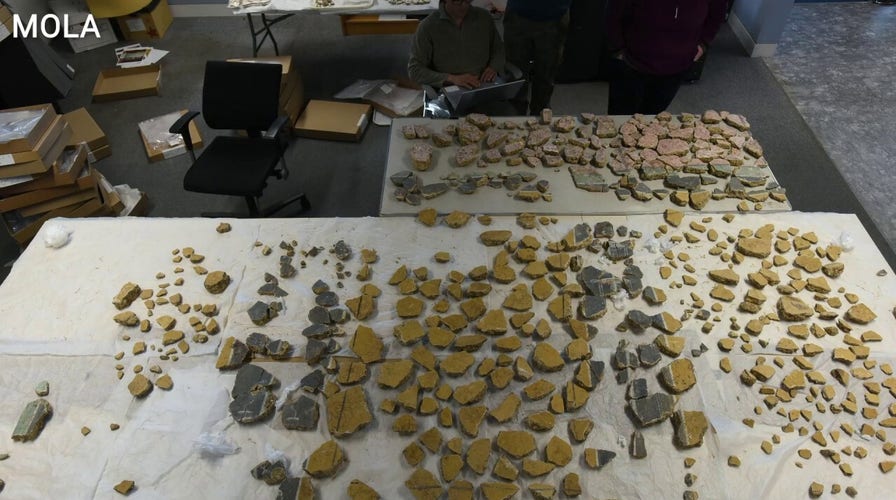 Video
VideoArchaeologists solve 1,800-year-old Roman fresco puzzle in London
London researchers have reconstructed a large Roman wall plaster collection, revealing 1,800-year-old frescoes that decorated a high-status building. (Source: MOLA)
NEW
You can now listen to Fox News articles!
Archaeologists recently found a large Roman industrial complex in northern England — along with hundreds of tools, offering rare insight into how Romans lived and worked.
The excavation was conducted by archaeologists at Durham University and centered around a site at Offerton, near Sunderland.
While excavating the River Wear, archaeologists uncovered more than 800 whetstones — stone tools that were used to sharpen weapons and other tools — as well as 11 stone anchors believed to be linked to river transport.
SELF-HEALING CONCRETE? BURIED POMPEII SITE REVEALS SECRET BEHIND ROME'S ENDURING STRUCTURES
In a press release, Durham University described the cache as "the largest known whetstone find of the period in North West Europe."
It went on, "It places North East England firmly within Roman Britain’s sophisticated manufacturing and trade network."
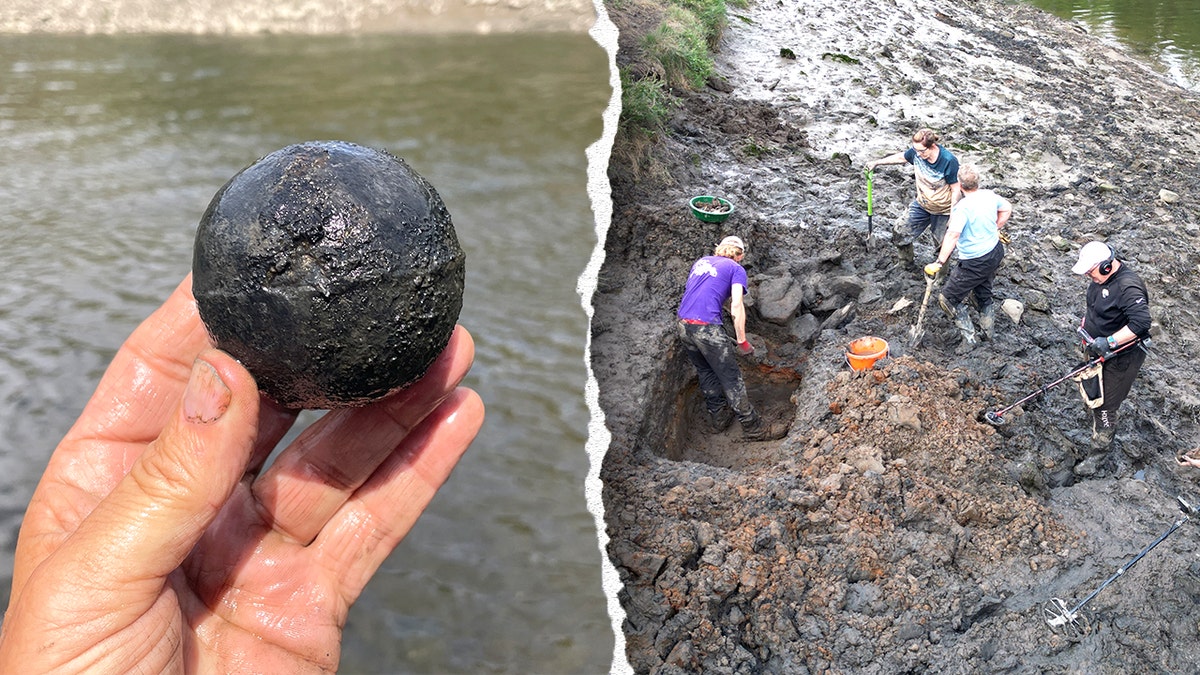
The excavation also uncovered later artifacts, including iron and stone cannonballs and lead shot dating to the English Civil War, according to Durham University. (Gary Bankhead, Durham University)
The finds date between 42 and 238 A.D., which researchers determined through sediment analysis confirming Roman-era activity.
The excavation also uncovered later artifacts, including iron and stone cannonballs and lead shot dating to the English Civil War, according to the university.
"Without whetstones, Roman tools simply wouldn’t function properly. They were as fundamental to daily life as chargers or batteries are today."
The site has been described as "a major production hub in Roman Britain."
Officials believe there may be hundreds — even thousands — more whetstones beneath the riverbank.
MAJOR ROMAN TREASURE HOARD RECOVERED AFTER DETECTORIST KEPT IT SECRET FOR YEARS
Many of the ones that were found appear to have been purposely discarded.
"Collectively, these discoveries could extend the known timeline of human activity along this part of the River Wear by over 1,800 years," the release stated.
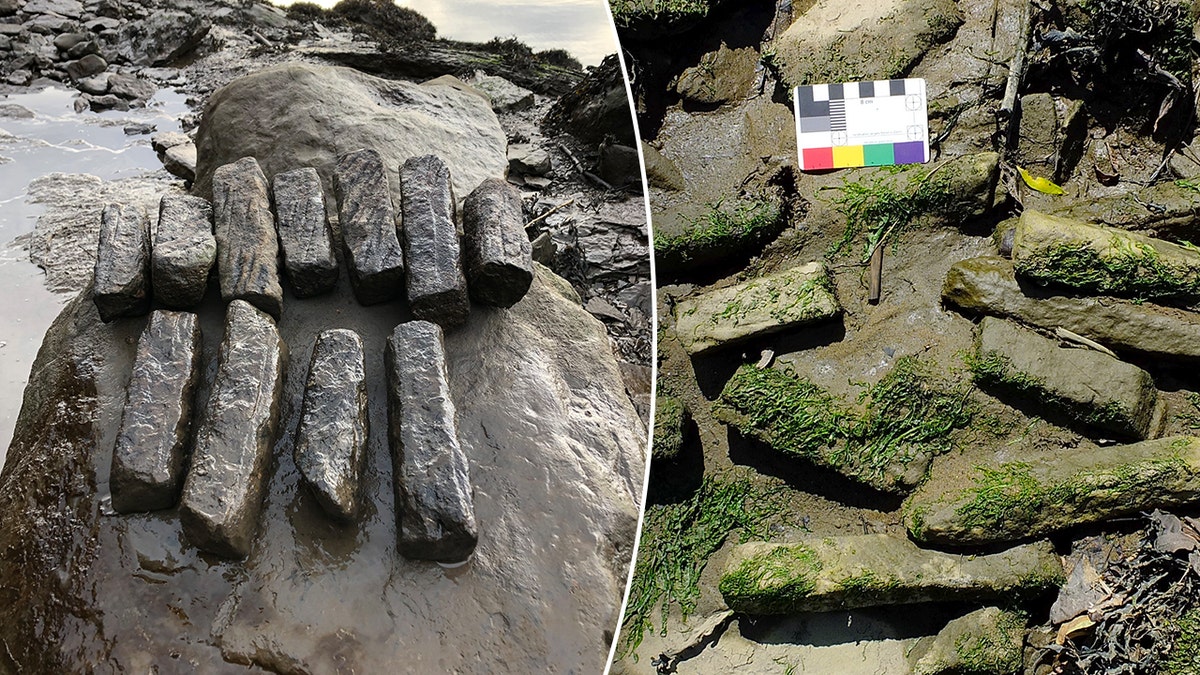
Roman-era whetstones recovered from the River Wear were essential tools used in nearly every craft and trade. (Gary Bankhead, Durham University; Keith Cockerill, Durham University)
Whetstones weren't just industrial tools — they were essential in every aspect of Roman life, said Gary Bankhead, an archaeologist at Durham University who was involved in the excavation.
"Every craft — metalworking, carpentry, leatherworking, agriculture, shipbuilding, and even domestic food preparation — relied on sharp tools," Bankhead told Fox News Digital.
ANCIENT ROMAN FORT YIELDS 2,000-YEAR-OLD FRUIT THAT SURVIVED THE CENTURIES, PLUS OTHER TREASURES
"Without whetstones, Roman tools simply wouldn’t function properly," he said.
"They were as fundamental to daily life as chargers or batteries are today."
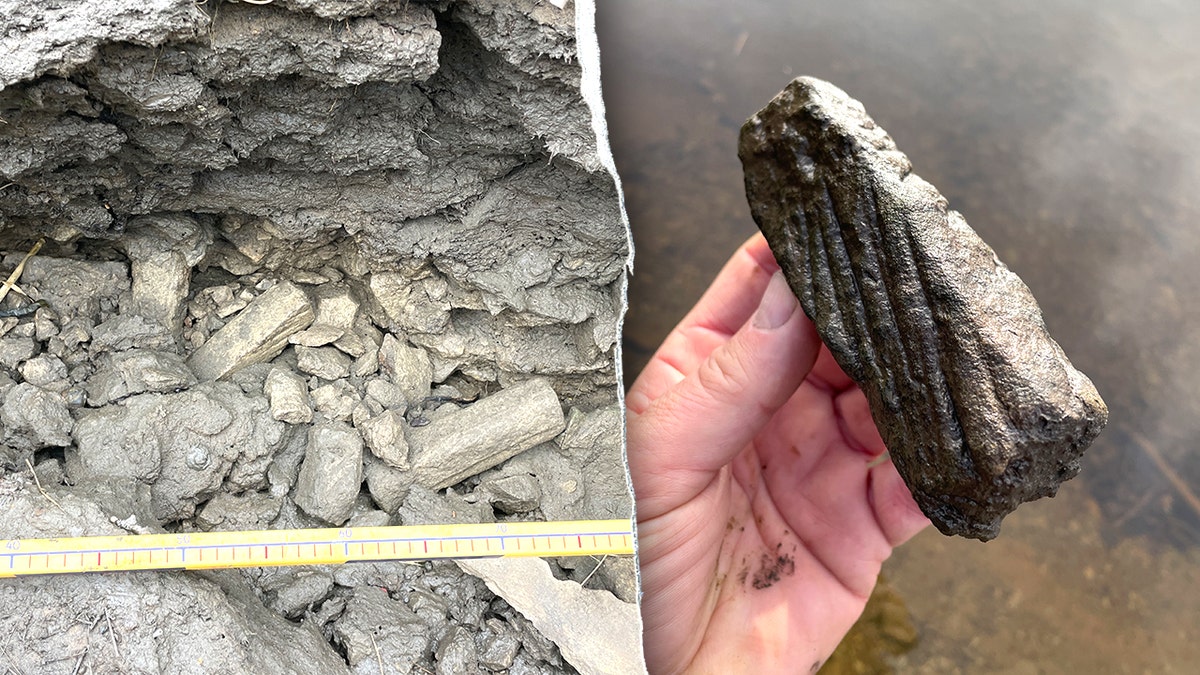
Archaeologists uncovered hundreds of Roman-era whetstones along the River Wear, pointing to large-scale industrial activity in northern England. (Gary Bankhead, Durham University)
The tools that were made here were probably exported to far wider parts of Roman Britain, Bankhead said — describing the discarded whetstones as the "most revealing" aspects of the site.
"Crucially, the position of the whetstones in one of the trenches shows that they were being dumped directly into the river from the bank side, mixed with the shatter and flakes created during the manufacturing process," he said.
TEST YOURSELF WITH OUR LATEST LIFESTYLE QUIZ
"This pattern of deposition strongly suggests that waste material was routinely tipped into the river as part of day-to-day industrial activity."
"The site holds "enormous research potential."
Bankhead said that Romans were very particular about quality, and whetstones "had to be uniform, durable and typically cut to a standard length of one Roman foot."
He added, "If a stone didn’t meet that standard, it was discarded."
CLICK HERE TO SIGN UP FOR OUR LIFESTYLE NEWSLETTER
"Almost all the stones we’ve recovered are production rejects — pieces that broke during shaping, contained natural flaws or failed to meet the precise dimensions required for a finished Roman whetstone."
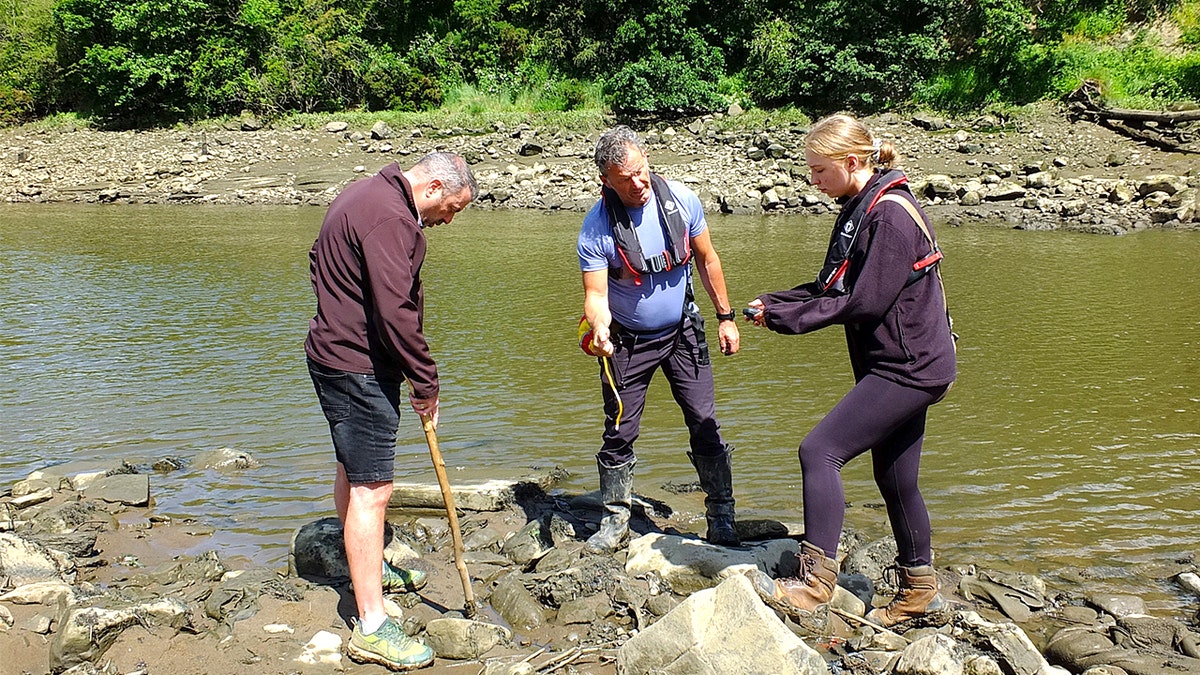
The discovery extends the known timeline of human industrial activity along the River Wear by more than 1,800 years. (Gary Bankhead, Durham University)
He added that Sunderland was already well known for its rich industrial and maritime heritage, but the recent discoveries push its industrial heritage back centuries.
"The academic consensus held that the Romans had never reached this part of the River Wear," he said.
CLICK HERE FOR MORE LIFESTYLE STORIES
"Instead, the evidence pointed to a large-scale Roman manufacturing center, producing whetstones on an industrial scale… In truth, almost every stage of the investigation has revealed something unexpected."

A depiction of Ancient Romans in England, circa 77 A.D. (iStock)
Bankhead said that future excavations in the area are being considered, and that the site holds "enormous research potential."
"The industrial activity we’ve uncovered is so substantial that it almost certainly formed part of a wider system — one that may still be waiting to be discovered," he said.
CLICK HERE TO GET THE FOX NEWS APP
"What Offerton already demonstrates is that our understanding of Roman Britain is far from complete."
Andrea Margolis is a lifestyle writer for Fox News Digital and Fox Business. Readers can follow her on X at @andreamargs or send story tips to andrea.margolis@fox.com.
Related Topics

Fox News Lifestyle
A look at the top-trending stories in food, relationships, great outdoors and more.
Arrives
Twice a week
By entering your email and clicking the Subscribe button, you agree to the Fox News Privacy Policy and Terms of Use, and agree to receive content and promotional communications from Fox News. You understand that you can opt-out at any time.
Subscribe
Subscribed
Subscribe
You've successfully subscribed to this newsletter!
Tags: 3fbeca05-e25f-5470-b079-d4db99d93571, fnc, Fox News, fox-news/science/archaeology, fox-news/science/archaeology/history, fox-news/travel/general/historic-sites, fox-news/world/world-regions/united-kingdom, fox-news/science/archaeology/ancient-rome, fox-news/travel, fox-news/travel/regions/europe, fox-news/travel, article